


4 / 5
Customers recommend us
Dishes and glassware are often the most fragile things you move or store. Yet nothing has to break: with the right boxes, some packing paper and the right technique, everything arrives intact. This guide shows the materials you need, the basic rules that make the difference, and how to pack plates, glasses and mugs safely, one by one.


Dishes and glassware are often the most fragile things you move or store. Yet nothing has to break: with the right boxes, some packing paper and the right technique, everything arrives intact. This guide shows the materials you need, the basic rules that make the difference, and how to pack plates, glasses and mugs safely, one by one.

Short answer: small sturdy boxes, wrap each item individually, plates on their edge and glasses upright, fill every empty space. A box where things shift or that's too heavy is by far your biggest risk. For the broader packing method: see the packing guide; here we go deep per type of crockery.
📦 Small, sturdy (double-walled) boxes, not large ones
📰 Clean packing paper or bubble wrap, no newspaper against dishes (ink rubs off)
🧦 Tea towels and socks as free cushioning
🏷️ Tape for top and bottom, plus a clear 'fragile' label
Cushion the bottom with a shock-absorbing layer. Crumpled paper, bubble wrap or a tea towel: that buffer absorbs vibrations and knocks during lifting and driving, exactly where most breakage happens.
Wrap each piece individually: every one gets its own crumple zone. Paper or bubble wrap, and between each layer a sheet or divider so nothing taps directly against anything else. No newspaper against dishes: ink rubs off.
Fill every gap so nothing can shift. Make the box full but liftable: guideline max 23 kg (see also the Dutch Arboportaal lifting guideline). A half-full box is just as risky as one that's too heavy.
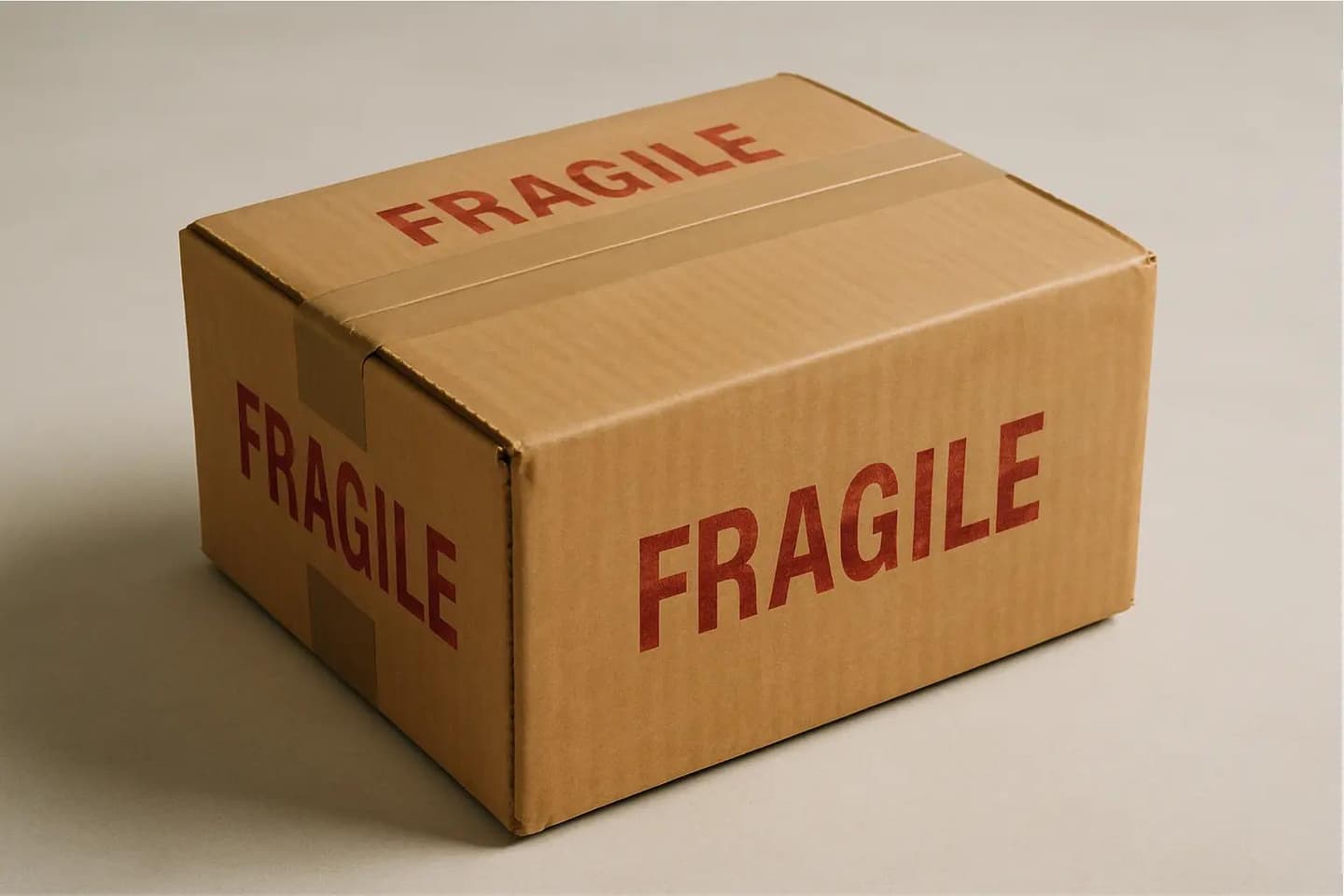
Tape top and bottom + clear 'fragile' label. Mark 'this way up' on several sides with the destination room. Heaviest boxes at the bottom, light ones with fragile contents on top. Transport calmly without sudden braking.
Smart tricks save a lot of breakage, and packing material:
By Bram Jansen, Lead Storage Advisor at Inbox Storage. Updated: June 2026.
Storing crockery for a while? Calculate your price in 60 seconds at Inbox Storage.
Enter your postcode and see in 60 seconds what storage for your items costs.
DONE IN 60 SEC.
Not every piece of crockery is packed the same way. Plates on edge, glasses upright with paper inside, mugs with attention to the handles. Below is the technique per type, from everyday crockery to antiques and crystal.
🍽️ Plates: on their edge in the box, never flat on top of each other
🍷 Glasses: paper inside, upright, extra protection on wine-glass stems
☕ Cups & mugs: protect the handles, place side by side
🏺 Vases & jugs: fill the hollow inside with paper
Plates vertical on their edge, like records in a rack. Never flat on top of each other (all pressure on the bottom plate). Wrap each plate separately + cardboard divider or paper between. Soft layer below and above, fitting without play.
Paper inside each glass + upright in cell divider. So glasses don't touch. For wine glasses: extra cushioning on the stem. That's the weakest point. Largest glasses at the bottom, tea towel over the top layer.
Fill inside + wrap the whole cup; extra attention to the handle. That breaks first. Cups and mugs side by side in the box, not on top. Only stackable ones may go on top with a protective layer between.
Bowls separately + hollow pieces (vases, jugs) filled inside AND wrapped outside. For antiques, porcelain and crystal: first a layer of acid-free paper against scratches, then bubble wrap. For larger fragile pieces, see also our guide moving fragile furniture.
Storing your crockery? Boxes upright, heaviest at the bottom, stably stacked. Fill completely so they don't collapse, and label 'fragile'. For antiques and crystal, dry climate-controlled storage is best, and check your insurance for valuable items. Other fragile item type? See also packing books (own pitfall: too-heavy boxes).
Packed small, well cushioned and kept upright: that's how your crockery arrives intact.
Calculate your storage price in 60 seconds at Inbox Storage.
Well packed? We pick up your boxes at your door and keep them dry and climate-controlled until you need them again.