




4 / 5
Customers recommend us
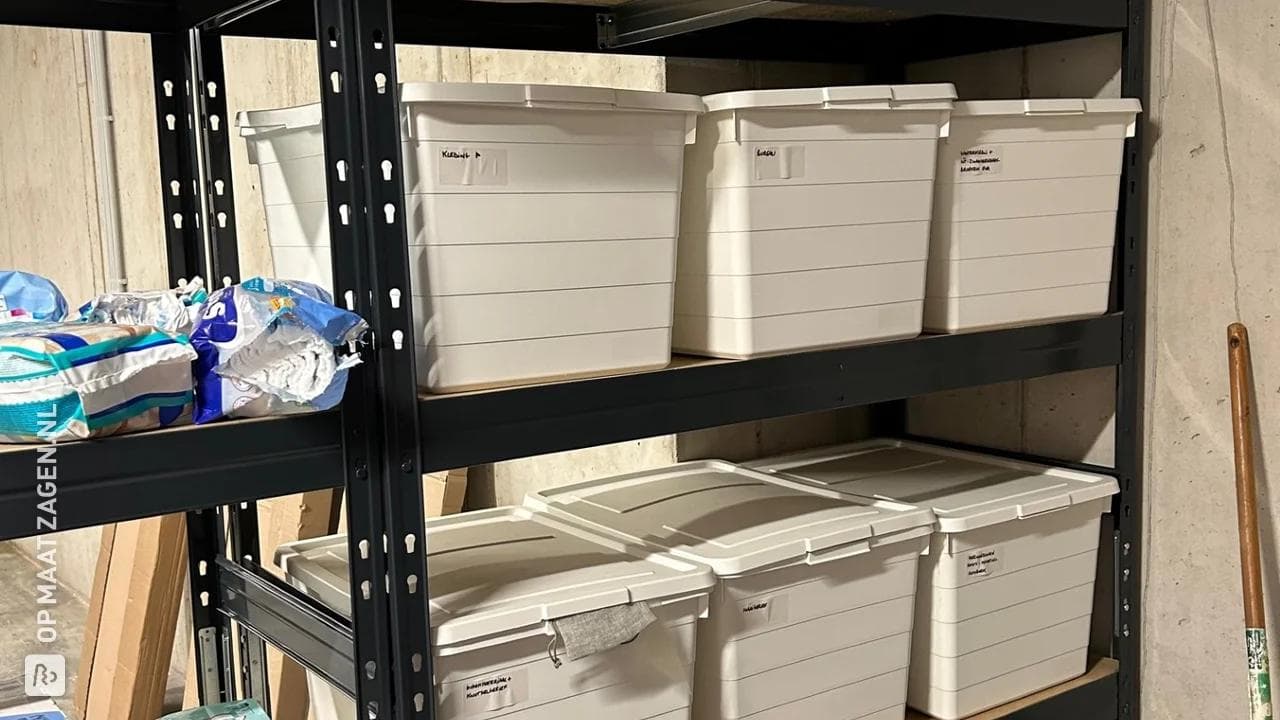
The cellar and storage room are the places to put things "quickly out of sight" — so they pile up unnoticed. The cellar is also often one of the dampest spots in the house, and damp is ruinous for textiles, paper and photos. This guide gives a clear step-by-step plan to clear your cellar or storage room, store damp-proof, and know what's better kept elsewhere.

The cellar and storage room are the places to put things "quickly out of sight" — so they pile up unnoticed. The cellar is also often one of the dampest spots in the house, and damp is ruinous for textiles, paper and photos. This guide gives a clear step-by-step plan to clear your cellar or storage room, store damp-proof, and know what's better kept elsewhere.

Short answer: take everything out, sort by category and decide per item, check straight away for damp and mould, clean thoroughly and let it dry well, then put things back damp-proof — off the floor, in sealed plastic bins. The biggest pitfall in a cellar isn't the clutter, but the damp.
Empty the cellar or storage room completely. Only then do you really see what's in there — often things you forgot years ago — and can you clean the space well and check for damp. No room to put it all? Then work in sections or side by side.
Sort into three piles: keep, bin and maybe. Check straight away for damp or mould damage — musty smells, stains or items that feel clammy — so you know what's still salvageable. At the end, go through your maybe-pile critically once more.
Clean the empty space thoroughly and let everything dry well. Ventilate the cellar as much as possible — there's often little daylight and air circulation. Thorough cleaning and good ventilation are your best defence against recurring damp and mould problems.
Put everything back to a fixed system and keep things off the floor on shelving. Use sealed plastic bins instead of cardboard, label them by category, and put heavy items at the bottom and rarely used ones at the back. That keeps everything dry and easy to find.
A damp cellar is ruinous for textiles and clothing, paper, documents and photos, wooden furniture and electronics — they can smell, grow mould or warp. Food doesn't belong there either, as it attracts pests. What is fine: robust items and (wine) bottles in sealed bins or on racks. Keep fragile and valuable things dry or in climate-controlled storage instead.
💧 Damp is the biggest enemy — check for mould and musty smells
📦 Sealed plastic bins, not cardboard
🧤 Get ready: bags, bins, labels and gloves
🗂️ Three piles: keep / bin / maybe
By Bram Jansen — Lead Storage Advisor at Inbox Storage. Updated: June 2026.
Store fragile things dry? Calculate your price in 60 seconds at Inbox Storage.
Enter your postcode and see in 60 seconds what dry, climate-controlled storage costs.
DONE IN 60 SEC.
In a cellar or storage room, storage comes down to one thing: dry and off the floor. With sealed bins, sturdy shelving and good ventilation you keep your things in good condition. Below is how to store damp-proof and what to do with the rest.
Damp rises from the floor, so don't put anything directly on the cellar floor. Use sturdy (metal) shelving or pallets, use the height with wall shelves, and put heavy items at the bottom and rarely used ones at the back. That keeps air circulating around everything.
Cardboard draws moisture, sags and grows mould — so use sealed, sturdy plastic bins. Transparent bins let you see at a glance what's inside, but label them by category anyway. Consider a dehumidifier or sachets of silica gel in the space to keep humidity low.
Give what's still good a second life via a charity shop or by selling it — don't just put it in the general waste. Old furniture, paint tins and electrical appliances go to the recycling centre. Rule of thumb: if you haven't used something in a year, it can usually go.
For items that stood in the damp cellar, assess whether they're still salvageable. With persistent mould or a musty smell, it's better to throw them away, and check that the mould hasn't spread to items next to them. What you keep, clean and dry well before it goes into the bin.
Textiles, photos, documents and wooden furniture don't belong in a damp cellar — they get damaged there. Want to keep them but have no dry spot? Then we pick them up at your door and keep them dry and climate-controlled in our secure hub in Gouda, so they don't grow mould or warp. From one month.
📦 Sealed, transparent plastic bins (and label them anyway)
🪜 On shelving or pallets — keep off the floor
🌬️ Ventilate; consider a dehumidifier or silica gel
💡 Good lighting — cellars often have no daylight
Dry, off the floor and in sealed bins — that keeps both your cellar and your belongings in good shape.
Calculate your storage price in 60 seconds at Inbox Storage.
We pick up damp-sensitive items at your door and keep them dry and climate-controlled — no mould or musty smells.