



4 / 5
Customers recommend us
Packing is often the biggest job of a move — and the moment when most damage happens. With the right approach, the right materials and a little planning, you keep it manageable and everything stays intact. This guide walks you through it step by step: from gathering boxes to safely packing your most fragile belongings.

Packing is often the biggest job of a move — and the moment when most damage happens. With the right approach, the right materials and a little planning, you keep it manageable and everything stays intact. This guide walks you through it step by step: from gathering boxes to safely packing your most fragile belongings.

Good packing doesn't start with the first box, but with planning and materials. Begin two to three weeks ahead with things you don't use daily, work room by room, and keep the kitchen and bathroom for last. Make sure you have enough boxes, paper, wrap, covers and tape before you start — running out halfway is the number one reason packing drags on. One thing to remember: only items packed according to our packing instructions are covered by the basic insurance.
Count on roughly 8 to 12 boxes per room; an average family home quickly needs 40 to 60 boxes (rough figures — it depends on how much you own). Get about 20% extra, because running short is exactly why packing stalls. Choose sturdy boxes with a well-taped bottom: you can stack them higher safely and they won't collapse.
Finish one room completely before starting the next, and don't mix contents from different rooms. You stay organised, you'll know exactly which box goes where, and unpacking goes much faster. Start with what you rarely use — attic, basement, guest room, seasonal items — and end with the kitchen and bathroom, which you need until the last minute.
Heavy items belong in small boxes, light items in large ones — a big box full of books becomes impossible to lift. Put heavy at the bottom, light on top, and fill empty space with crumpled paper, towels or cushions so nothing shifts. Fill boxes fully but not insanely heavy: a box you can't lift comfortably is too heavy.
Write on the top and the side which room the box belongs to and roughly what's inside, and clearly mark 'fragile'. Handy: give each room its own colour of tape or sticker and put that same colour on the doors in your new home — anyone helping instantly sees where a box goes. Number your boxes and keep a short content list; that's invaluable if you later need to find something in storage.
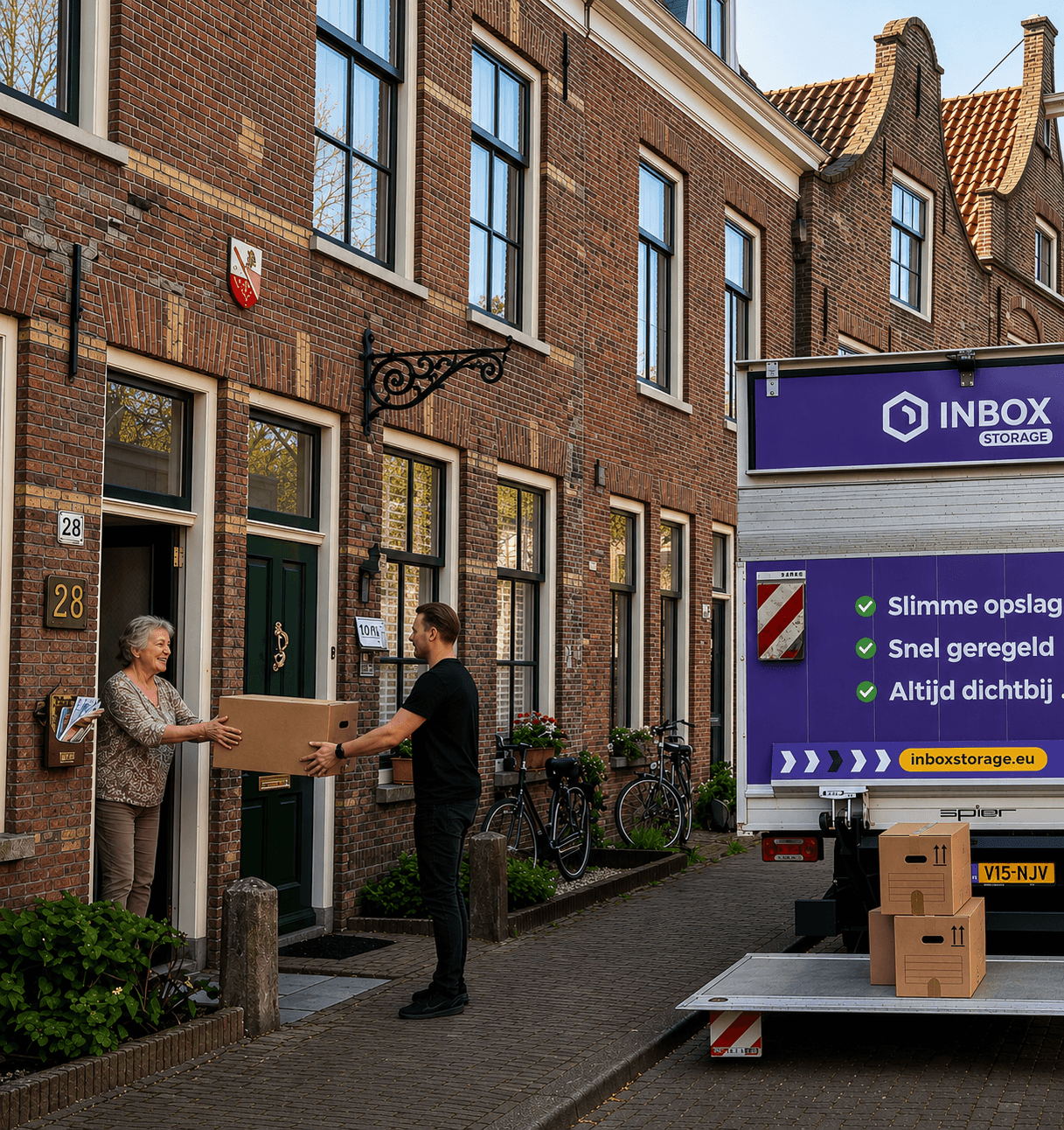
Renovating, between two homes, or not everything fits in your new place straight away? Pack the things you won't need for a while and have them stored temporarily. We pick up your packed boxes and furniture at your door, keep them safe and climate-controlled in our secure hub, and bring everything back as soon as you're ready. You pay monthly and cancel whenever you like.
📦 Sturdy boxes in two sizes — small for heavy items, large for light ones
📰 Packing paper or bubble wrap to protect fragile items and fill empty space
🛋️ Moving blankets, stretch wrap and furniture covers for furniture, mattress and large items
🏷️ Tape, markers and (coloured) labels to seal and label every box
By Bram Jansen — Lead Storage Advisor at Inbox Storage. Updated: June 2026.
Need more space during your move? Calculate your price in 60 seconds at Inbox Storage.
Enter your postcode and see in 60 seconds what temporary storage for your items costs.
DONE IN 60 SEC.
Not everything is packed the same way. Dishes go upright, books in small boxes, furniture taken apart and electronics ideally back in their original box. Below are the key rules per type. For the trickiest categories we have separate, in-depth guides — you'll find them under related articles below.
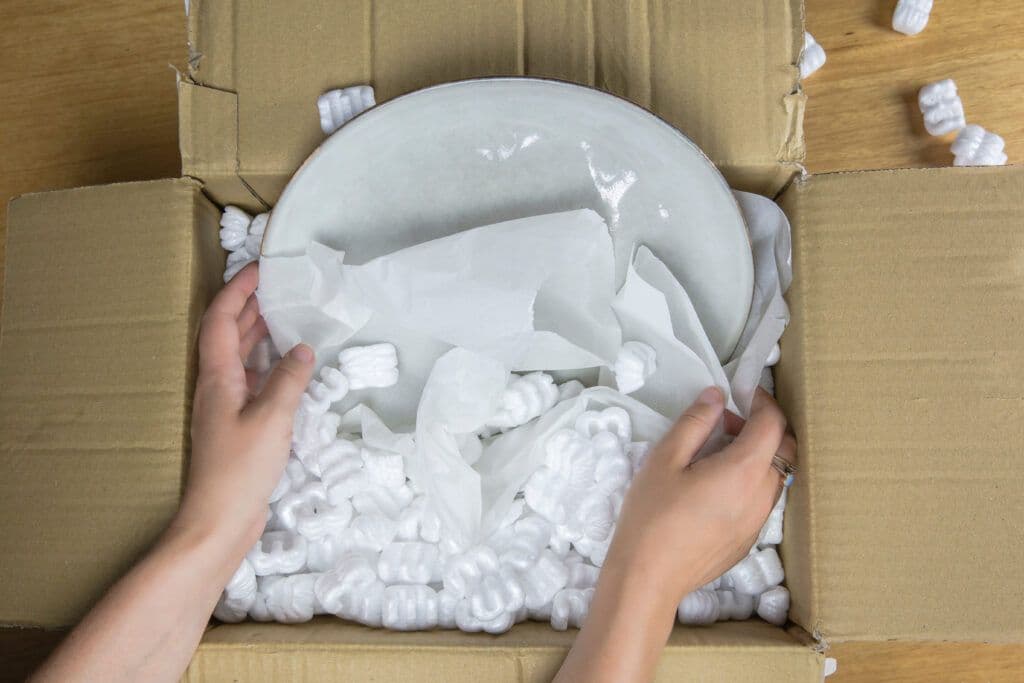
Wrap plates, glasses and bowls one by one in paper and fill the box well so nothing shifts. Stand plates on their edge rather than flat — they absorb knocks far better that way. For extra cushioning you can slip glasses and vases into a couple of socks. Use small, sturdy boxes, because a box of crockery gets heavy fast, and mark it clearly as 'fragile'.
Books are heavier than they look: pack them in small boxes and don't overfill. A handy trick is to put books in a wheeled suitcase — you save your back and simply roll them to the van. Clothing can stay on hangers in a wardrobe box (crease-free) or rolled in a large box; slip a clean garment cover or bin bag over a group of hangers. Read more in our dedicated guide on packing books.
Take furniture apart as far as possible and keep screws and bolts per piece in a labelled bag taped to that item — or photograph how it all fits before unscrewing. Protect scratch-prone surfaces and fragile corners with a moving blanket and stretch wrap, and never tape directly onto the furniture, as it leaves marks. Heavy or awkward pieces? Read our guide on moving heavy furniture.
For TVs, audio and white goods, use the original box if you can; if not, wrap the device in a blanket and wrap and mark it 'fragile'. Before disconnecting, photograph the cables at the back and keep cords and accessories with the device. Mirrors and paintings get cardboard front and back and stand upright. For white goods and fragile furniture we have separate guides — see the related articles.
Not everything goes into the van or storage. Pack a separate 'first day' box with things you'll need right away: toiletries, chargers, some clean clothes, coffee and toilet paper. Take valuables and important documents — passport, contracts, keys, jewellery — with you, never among the boxes. Pack this box last and unpack it first.
🍽️ Kitchen: plates upright, glasses wrapped individually, sharp and fragile items separate
📚 Books: small boxes, not too full; clothes hung or rolled
🛋️ Furniture: disassemble where needed, protect corners, never tape directly on furniture
📺 Electronics: original box or plenty of protection, keep cables with the device
Step by step, room by room — that keeps packing manageable.
Short on space for a while? Calculate your storage price at Inbox Storage.
A few smart tricks make packing faster and safer — and a handful of classic mistakes cost you time, money or a damaged household. Below are the tips that make the difference and the pitfalls best avoided, followed by the questions we get asked most.
Count on roughly 8 to 12 boxes per room. A small apartment quickly lands around 30 to 40 boxes, a spacious family home closer to 60 to 90 (rough figures — it depends heavily on how much you own). Always take about 20% extra: spare boxes are never a problem, running out halfway is.
For non-fragile items, fine. Just note that newspaper ink can rub off on light crockery, white textiles or delicate surfaces — for those, use clean packing paper or bubble wrap instead. Newspaper is ideal as cheap filler for empty space in the box.
Start with what you don't need daily: seasonal clothing, books, decorations and everything in the attic, basement or storage room. You can pack those weeks ahead. The kitchen, bathroom and your everyday items are packed last and unpacked first in your new home.
At Inbox Storage: only items packed according to our packing instructions are covered by the basic insurance. So pack fragile things properly and report particularly valuable or large pieces in advance. Unsure about a specific item? Check our packing instructions and insurance terms, or just ask us.
With enough materials, a room-by-room approach and the right technique per item, your whole household arrives intact at its destination — whether that's your new home or temporary storage. If you need extra space during your move, we pick up your packed belongings at your door and keep them safe and climate-controlled until you need them again.
🧦 Socks around glasses, towels around plates — protection that's coming along anyway
🧴 Bottles? A piece of film under the cap prevents leaks in transit
📸 Photograph cables and screws before you take anything apart
🎨 Use colour codes per room on the box and on the room door in your new home
Questions about packing, insurance or storage? Our team is happy to help.
Calculate your storage price in 60 seconds at Inbox Storage.
Whether you're packing one room or a whole house — we pick up at your door and bring everything back when you're ready.